
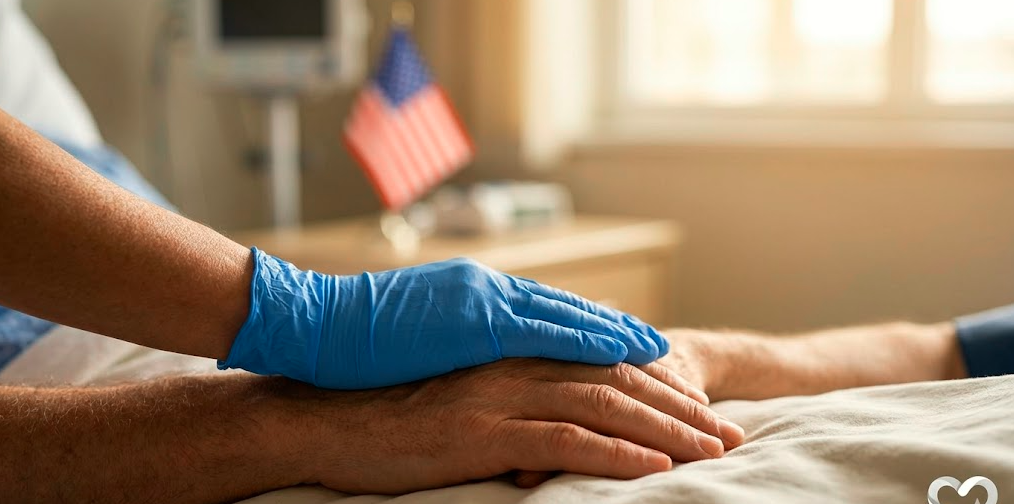
Whenever the search query “Trump Walter Reed” surges to the top of Google Trends, a distinct ripple of tension and curiosity spreads across the United States. Recently, rumors and speculation surrounding the 47th President’s schedule sent the internet into a frenzy, with millions of Americans refreshing their feeds for updates.
While the White House routinely clarifies the facts—often brushing off rumors of sudden hospital visits—the immediate national reaction is worth examining. Beneath the political debates, the rapid spread of these rumors reveals a profound truth about the United States: at our core, we are deeply connected by our shared human vulnerability.
The Symbolism of Walter Reed
Walter Reed National Military Medical Center in Bethesda, Maryland, is more than just a hospital. For decades, it has served as a sanctuary of healing for the nation’s military heroes and its Commanders-in-Chief. When Americans hear the name “Walter Reed” in the same sentence as a sitting president, it instantly strips away the invincibility usually associated with the Oval Office.
It reminds us that the people who hold the highest offices in the land are not superheroes; they are human beings. They are susceptible to the same physical fragilities, illnesses, and exhaustion that any of us might face.
Health: The Great Equalizer
In a country as vast and ideologically diverse as the United States, it is easy to focus on what divides us. Political polarization often paints leaders and citizens alike as caricatures rather than real people. Yet, health emergencies—real or rumored—act as the great equalizer.
When speculation arises about a leader’s well-being, the immediate response from the public often transcends party lines. For a fleeting moment, the focus shifts from policies and polls to the basic human condition. We are reminded of our own families, our aging parents, and our own encounters with hospital waiting rooms. The anxiety that sweeps the internet during these trending moments isn’t just about political stability; it is a reflection of our innate empathy and understanding of human fragility.
A Nation United by Vulnerability
The American people possess a unique collective spirit. When uncertainty strikes, our first instinct is to look for information, seek out community, and try to make sense of the situation together.
The trending of terms like “Donald Trump hospital” shows how quickly a nation of over 330 million people can tune into a single, shared concern. It highlights a fundamental humanity: we care about the continuity of our country, and by extension, the lives of those who lead it. Even those who disagree fiercely on policy often recognize that cheering for illness or suffering goes against the very fabric of human decency.
The Takeaway: Empathy in the Digital Age
In an era where news cycles move at lightning speed and social media algorithms amplify panic, it is vital to pause and reflect on why certain topics capture our collective attention.
The next time a phrase like “Trump Walter Reed” trends, let it serve as a quiet reminder of our shared humanity. Let it prompt us to extend a little more grace to one another, recognizing that behind every political figure, every anonymous social media account, and every citizen of the United States is a human being navigating the unpredictability of life.
Ultimately, our greatness as a nation isn’t just measured by our economic power or political influence, but by our capacity for empathy when faced with the vulnerable reality of the human condition.